If science wasn’t exactly your strong point at school, you could be forgiven for thinking that five floors devoted to the subject will be as thrilling as a trip to the dentist. But the Science Museum manages to make science thrilling, even for the kind of people who’d normally run in fear at the ‘s’-word. The most-visited science and technology museum in Europe, it’s filled with interactive games and experiments to try out. But besides all the interesting-looking buttons to press, there are also over 15,000 fascinating items on display, from Stephenson’s Rocket to the Apollo 10 command capsule. So if you’re in London on a city break or for a big event, it’s well worth taking time out to visit the Science Museum. You may find you’ve learnt things faster than you can say “what does that lever do?”
Both the Science Museum and the Victoria and Albert Museum were originally known as the South Kensington Museum, which opened in 1858. The Science Museum separated in 1909 and moved into its current building in 1919, sharing the space with the Imperial War Museum between 1924 and 1935. The first ‘Children’s Gallery’ opened in December 1931, and the Museum’s had a great reputation as a place to keep the kids entertained ever since. The Science Museum’s popular Launchpad area (where kids could get hands-on with different experiments) has closed recently, but it’s been replaced by Wonderlab, a paid-for feature with 50 interactive exhibits and live shows. The Museum’s had some interesting items displayed over the years. The Wright flyer, the world’s first heavier than air aircraft to fly, was originally displayed at the Science Museum in 1928 and it’s held temporary exhibitions on everything from typewriters to Dr Who.
Stay in a Premier Inn hotel near the Science Museum, and you’ll be close to the Natural History Museum, Victoria and Albert Museum and the Albert Hall - the perfect place for a cultural weekend.
Science Museum
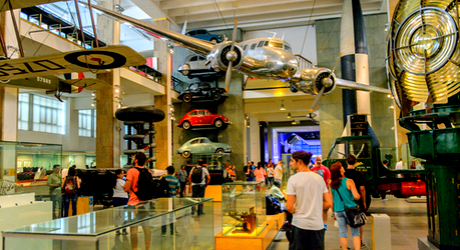
Science Museum
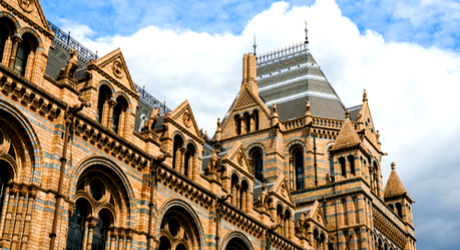
Science Museum
Essential Information
If you’re visiting the Science Museum, you’ll find some state-of-the-art facilities. Here’s everything you can expect, along with all the information you need to make your visit run smoothly.
Important info
The Museum opens every day at 10am and closes at 6pm (7pm in the school holidays). Last admission is at 5.15pm and galleries start to close at 5.30pm. It is shut between the 24th and 26th December. Guidebooks are available to buy from the Museum shop and, if you’re here with kids, a great idea is to buy them an Explorer Book, to help them get the most out of their visit.
Admission
Admission is free, but unlike other London museums, there is some pressure to pay a suggested donation of £5. Factor this in, because you’ll also pay extra for the Wonderlab gallery (a must if you have children), temporary exhibitions, the Imax cinema, the simulators and rides. Even the cloakroom can be quite expensive if you have lots of items you need to check in.
Gift Shop
There’s a small selection of gifts and toys available just outside the Wonderlab gallery that are great for the kids to spend their pocket money on, but there’s also a much bigger shop on the ground floor, next to the main ticket desk. Perfect for geeky gifts, it’s filled to bursting with a quirky range of toys, gadgets and high-tech gizmos. If you can leave here without parting with some cash you’re doing very, very well.
Accessibility
A small number of wheelchairs are available which may be booked in advance by calling 0870 870 4868, or borrowed on the day. All of the Museum is accessible with lift access to all floors. There are disabled toilets in the basement and on the ground, first, second and third floors. They are also available on all floors of the Wellcome Wing. To find them, have a look at the Museum map or use the touchscreen information points.
Things to see
The Science Museum is a temple to technology packed full with amazing stuff to play with. But where should you head for first? We've picked out the best things to see and do on each floor.
Basement
Highlight of this floor for families has to be the Garden - a fully interactive space, created just for children aged three to six. Little explorers can learn about floating and sinking, shadows and reflections and how sound carries. Luckily, a team of ‘Explainers’ are on hand in the four main areas - building, water, light and sound. You can’t miss them - they all wear bright red T-shirts!
Ground Floor
Home to the Making The Modern World exhibition, this floor houses some not-to-be-missed items, such as Apollo 10 command module, Stephenson’s Rocket, and the first Apple computer. You’ll also find the IMAX cinema here - you do pay extra for the experience, but it’s well worth it to get the feeling that you’re actually in the centre of all the action on screen.
First Floor
Don’t miss the Who Am I? exhibition on this floor, which invites everyone to thoroughly explore their favourite subject - themselves! Full of hands-on displays, you can find out what your voice sounds like as a member of the opposite sex, see what you’ll look like as you age and investigate fascinating subjects that make you, you - such as your personality, intelligence and language.
Second Floor
Tech-heads will love the Information Age gallery, which celebrates more than 200 years of innovation in information and communication technologies. Re-live remarkable moments in history, from the first BBC radio broadcast in 1922 to the dawn of digital TV. There’s also an app to download that’s perfect for teenagers, giving them lots of fun ways to interact with the displays.
Third Floor
The third floor is fun, fun, fun - although you will need to pay for some of the best bits. First off, there’s Wonderlab - the new paid-for exhibition packed with science experiments to try and live shows to watch. Then there’s Fly Zone, packed full of simulators to get your adrenaline pumping. Fly an RAF jet, join the Red Arrows or take the controls in Fly 360. Free to enter is the Flight gallery, which lets you marvel at some fabulous flying machines.
Eating and Drinking
There are plenty of places to eat and drink within the Museum but, as it’s free to get in, serving food is a way for it to make money, so don’t expect it to be cheap. You don’t have to buy food here though, there are picnic areas where you can eat your own sarnies - you’ll find these in the Basement, on the first floor opposite Time Measurement and on the third floor.
Located on the ground floor of the Wellcome Wing, the Deep Blue restaurant has waiter service and Wagamama-style tables with benches. There’s a great atmosphere, thanks to the large deep blue window and under- table lighting. Food is seasonal and tasty with everything from burgers and pasta to salads and soups. And kids under 12 eat free with every adult main meal purchased!
With so much to take in, you’ll need to recharge after all that wandering around, so what better place to go to the Energy Cafe? Located in the Energy Hall on the ground floor, this is a self-service café where you can help yourself to pizza and salads, wraps, sandwiches and daily hot specials. Perfect for lunch.
Kids of all ages will love a trip to the Shake Bar - the perfect place for a sweet pick-me-up after a long session of learning at the Wonderlab. Looking more like a cross between a laboratory and a pumping station then a cafe, there’s ice cream by the tub or cone and the chance to blend your own shakes out of a choice of ingredients.
Getting to British Museum
The main entrance to the Museum is on Exhibition Road in South Kensington. The postcode for your sat nav is SW7 2DD, but it’s best to leave the car behind. There are no car parking facilities on-site and local parking is very limited - although there are pay and display car parks in Prince Consort Road and Queen's Gate.
By bus and train
Bus routes 14, 49, 70, 74, 345, 360, 414, 430 and C1 all stop outside South Kensington tube station, and it’s a short walk from here. Victoria is the nearest mainline train station, and only two stops away from South Kensington. From Victoria, hop on a westbound District or Circle Line train.
By tube
The nearest tube station to the Museum is South Kensington which is just a five-minute walk away. It’s on the District, Circle and Piccadilly lines. Once off the tube, there’s a pedestrian subway that connects South Kensington station to the main entrance of the Science Museum.
By bike
If you’re coming by bike, there are no dedicated cycle racks at the museum, but folding bikes can be left in the cloakroom on the lower ground floor. Cycle hire docking stations are available outside the Museum on Exhibition Road and on Thurloe Place near South Kensington tube station.
Walking
The London Science museum is in central London, a short walk from South Kensington tube station. If you wanted to get here on foot, it’s only a 10-minute walk from Hyde Park, and also within walking distance of other London attractions, such as the Victoria and Albert Museum and the Albert Hall.